troy-market-share-2025-local-payment-systems
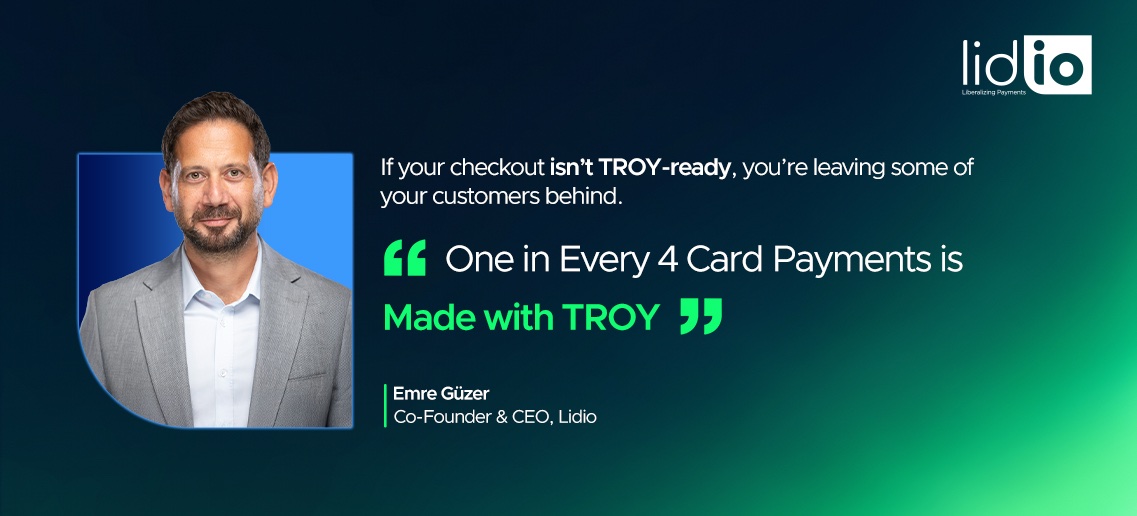
TROY reached 25.3% market share in 2025. Lidio CEO Emre Güzer explores the rise of local payment systems and the future of payment orchestration. ...
TROY reached 25.3% market share in 2025. Lidio CEO Emre Güzer explores the rise of local payment systems and the future of payment orchestration.
Emre Güzer | Co-Founder & CEO, Lidio
One in every four card payments in Türkiye is now made with TROY.
According to BKM's 2025 data, TROY's transaction volume grew by 125%, reaching TRY 4.8 trillion, while its market share by transaction value increased from 18.3% to 25.3% in just one year. The number of TROY cards exceeded 90 million. This is no longer a story about an "alternative" payment network. The domestic card scheme has become one of the key pillars of Türkiye's payment ecosystem.
I have been part of the payments industry for nearly 25 years. From helping establish Türkiye's first Payment Service Provider (PSP) to launching the country's first payment orchestration platform with Mobilexpress, I have consistently observed one thing: when market dynamics shift, those who adapt their infrastructure the fastest emerge as winners. TROY's rise represents exactly this kind of turning point.
I see three key dimensions to this transformation.
The growing adoption of TROY in public-sector payments, banks' transformation of their card portfolios, and consumers' increasing preference for domestic brands have all occurred simultaneously. No business accepting payments in Türkiye can afford to ignore this shift. Merchants that cannot seamlessly accept TROY at checkout risk losing access to a quarter of their potential customers.
Much of the world is moving toward local payment infrastructures. RuPay and UPI in India, Elo and Pix in Brazil, and UnionPay in China have gained significant traction in their respective markets. Over the past two years, two particularly important new initiatives have joined this global movement.
In the Gulf region, Jaywan, operated by Al Etihad Payments under the Central Bank of the UAE, officially launched in July 2026. Banks began issuing cards, while major merchants such as Etihad and Emirates quickly moved to accept the scheme. What makes Jaywan particularly interesting is its approach to global card networks: rather than competing directly with them, it is designed to coexist. It became one of the first domestic schemes to introduce co-badged cards in partnership with Mastercard.
In Africa, PAPSSCARD was launched in Abuja in 2025 as the continent's first pan-African card scheme. Established through a collaboration between Afreximbank, PAPSS, and Mercury Payment Services, the initiative aims to enable card transactions within Africa to be processed without routing them outside the continent. What makes PAPSSCARD especially significant is that it represents a shared local payment scheme for an entire continent rather than a single country.
I believe that in the coming years, these local card schemes, together with Alternative Payment Methods (APMs), will capture an increasingly larger share of transaction volumes traditionally processed through global card networks. The era in which a single global network could support virtually every payment need is coming to an end. A multi-layered ecosystem, where local and global payment infrastructures operate together, is taking its place.
Europe's Wero is another interesting example of this transformation. Unlike TROY, Jaywan, or PAPSSCARD, Wero is not a card scheme. It is an account-to-account (A2A) payment solution built on instant bank transfers, meaning it does not compete directly in the same category. However, it addresses the same fundamental question: how much of an economy's payment activity should flow through its own infrastructure?
Launched as a peer-to-peer (P2P) payment solution in Germany, France, and Belgium in 2024, Wero has reached more than 50 million users. Its e-commerce acceptance began expanding from Germany at the end of 2025. The migration of the Netherlands' iDEAL payment system to Wero further demonstrates Europe's commitment to strengthening its domestic payment infrastructure. Although the underlying technologies differ, Europe's initiative reflects the same broader global trend represented by TROY in Türkiye, Jaywan in the Gulf, and PAPSSCARD in Africa.
As the number of payment methods grows, so does complexity. Bank POS systems, local and global card schemes, and APMs each bring their own integrations, routing requirements, and reconciliation processes. In this new environment, competitive advantage will not come simply from offering more payment methods, but from intelligently managing them through a single platform.
This is precisely where Lidio comes in. Building on more than 15 years of experience since Mobilexpress, we enable businesses to manage their existing bank POS systems, Lidio POS, and local payment methods through a single integration. As the first institution to receive cross-border authorization from the Central Bank of the Republic of Türkiye (CBRT), we also enable global merchants to enter the Turkish market while accessing its local payment infrastructure. With more than 60 million stored cards, coverage across more than 100 currencies and countries, and annual transaction volume approaching USD 6 billion, we are not simply observing this transformation from the outside. We are actively shaping it from within.
BKM has set a market share target of 30% for TROY in 2026. If achieved, nearly one-third of all card spending in Türkiye will flow through the domestic card scheme. Businesses that prepare for this shift today will be ready when that moment arrives.
Empowering payments begins with giving businesses more choice. It becomes complete when those choices can be managed seamlessly.
To manage TROY and other local payment methods through a single integration, get started with Lidio.
TROY reached 25.3% market share in 2025. Lidio CEO Emre Güzer explores the rise of local payment systems and the future of payment orchestration. ...

One-Click Payment: Discover New Ways to Increase Conversion Rates in E-Commerce...

Learn about your rights in online shopping and what accepted agreements mean. Visit our blog for all the details!...

What is a startup and how do you launch one? Discover key steps and insights in our latest blog post!...

Learn how digital wallets simplify payments and transform the way we shop online...
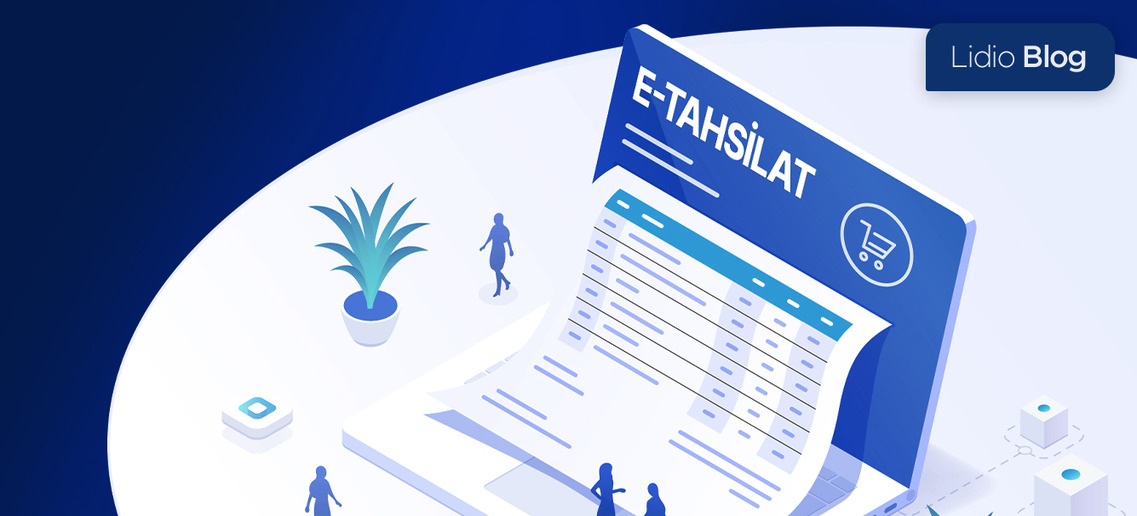
What is E-Collection and why is it essential for modern businesses? Learn how digital collection systems transform payment processes in our latest blog post!...
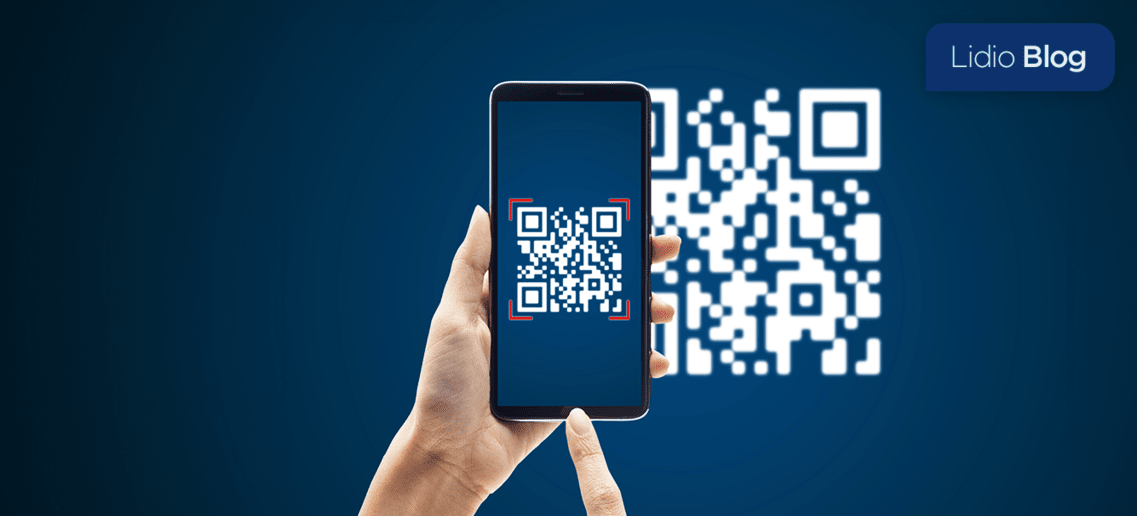
Learn how QR codes make payments and digital interactions faster, easier, and smarter!...

Discover alternative payment methods like credit card, cash on delivery, bank transfer, and mobile payment in our blog!...

The key to secure online shopping: What is 3D Secure Payment and how does it work? Learn more in our latest blog post!...

What is open banking and how does it benefit businesses? Read our blog post to find out!...

What are the key tips for online selling in e-commerce and how can you improve customer experience? Find out in our blog!...
What security measures help prevent fraud in online shopping? Explore the details in our latest blog post!...

What are Issuer, Acquirer, and PSP? Why does choosing the right PSP matter? Learn more in our blog post!...

What is ERP and how can you track POS transactions and account activity? Read our blog post to learn more!...

What are the benefits of managing collections from a single screen in the payment process? Discover the advantages in our blog!...

Everything you need to know about Virtual POS: Learn more in our blog post!...

How are international payments made and which methods are used? Find out all the details in our blog post!...

Why does cart abandonment matter for businesses and how can it be minimized? Read our blog post to learn more!...
"What is financial liberalization from traditional payments to open banking, and why does it matter? Discover the answer in our blog post!...

Payment systems refer to all financial technologies used to collect payments in your online stores. Visit our website for more details!...
Maximize your revenue with flexible payment solutions tailored to your business needs. Discover how in our latest blog post!...
What is digital credit and how does it work? Explore how businesses and consumers can benefit from it in our latest blog post!...
What is a payment page and how can you be sure it's secure? Learn how to spot safe checkout steps in our latest blog post!...

What is payment by link, how does it work, and what are its benefits? Read our blog post to explore all about link-based payment systems!...

What is checkout and why does it matter? Learn how it impacts the customer experience and conversion rates in our latest blog post!...
What is the CVV code and why is it important for secure payments? Find out in our latest blog post!...

What is authorization (provision) and what is it used for? Learn all the details in our latest blog post!...